
Executive summary
Artificial intelligence is becoming an important part of how organizations operate, compete, and serve customers. From automating repetitive workflows to improving forecasting and customer experiences, AI offers opportunities to increase efficiency and develop new capabilities. Yet successful implementation requires much more than choosing a model or buying a subscription.
Organizations must identify valuable use cases, prepare trustworthy data, establish governance, integrate AI into existing systems, train employees, and measure whether their investments deliver real outcomes. For businesses planning technology investments in 2027, the key question is where AI creates measurable value—and how to deploy it responsibly at scale.
What Is an AI Implementation Roadmap?
An AI implementation roadmap is a structured plan for adopting, deploying, and scaling artificial intelligence solutions. It connects technology decisions with business objectives, operational requirements, organizational readiness, and measurable performance indicators. Unlike an isolated experiment, it provides coordinated priorities, ownership, decision gates, and a method for measuring success.
A strong roadmap answers six questions: Which problems should AI solve? What data and infrastructure are required? Which models and vendors fit the needs? How will systems integrate? What controls protect people and information? How will results be evaluated and successful applications scaled?
Why Businesses Need an AI Strategy in 2027
AI capabilities are evolving rapidly, from generative assistants to predictive systems and agents capable of coordinating multiple tasks. However, deploying technology without a clear strategy can create fragmented tools, unexpected operating costs, security vulnerabilities, unreliable outputs, and low adoption.
A customer service organization might benefit more from a knowledge assistant integrated with its CRM than from a custom foundation model. A manufacturer may generate more value from predictive maintenance than from a general chatbot. The right strategy depends on business priorities, available data, maturity, and risk tolerance.
| Business objective | Example AI application | Success metric |
| Productivity | Document and workflow assistance | Hours saved |
| Customer experience | Knowledge-based support | Resolution time / CSAT |
| Sales effectiveness | Lead scoring and intelligence | Conversion rate |
| Forecast accuracy | Predictive analytics | Forecast error |
| Risk management | Anomaly detection | Detection / false positives |
Step 1: Assess Your Organization’s AI Readiness
Start with a readiness assessment covering business alignment, data quality, technology architecture, workforce capability, and governance. Leadership should specify business problems and appoint owners. Data teams should examine quality, access, lineage, and permissions. IT should assess APIs, infrastructure, security, and observability. HR and operational leaders should evaluate skills and change readiness.
The purpose is not to achieve a perfect score before beginning. It is to identify which weaknesses threaten a specific pilot. A knowledge assistant may depend heavily on document quality and permissions, while predictive maintenance may require reliable sensor data and monitoring.
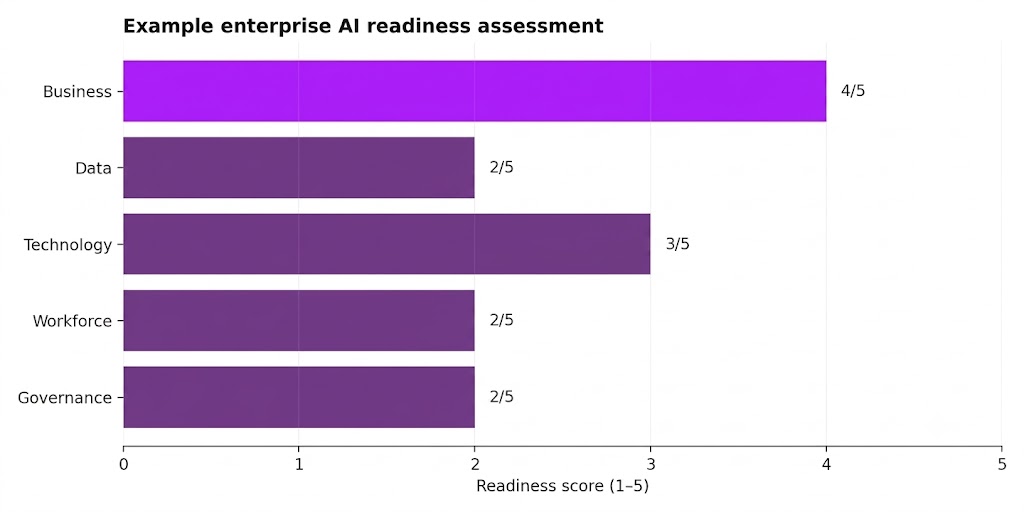
Figure 1. Hypothetical readiness scores; illustrative, not an industry benchmark.
Key deliverable: an AI readiness report listing strengths, gaps, accountable owners, and remediation priorities.
Step 2: Identify and Prioritize High-Value AI Use Cases
A frequent mistake is selecting technology before defining the business problem. Instead, interview department leaders about expensive manual tasks, customer friction, slow decisions, and error-prone processes. Then evaluate candidate use cases by expected impact, data availability, implementation complexity, risk, and time to value.
Potential early use cases include an internal knowledge assistant, invoice extraction, support-ticket classification, code documentation, and forecasting. More autonomous agents that can change financial or operational records typically require stronger controls and may be better suited to a later phase.
| Use case | Business impact | Complexity | Illustrative priority |
| Internal knowledge assistant | High | Low–medium | High |
| Invoice data extraction | High | Medium | High |
| Customer churn prediction | High | Medium–high | Medium |
| Autonomous enterprise agents | Potentially high | High | Later phase |
| Marketing content assistance | Medium | Low | Early pilot |
Select a first use case that can be evaluated objectively, uses accessible data, has a committed business sponsor, and presents manageable risks. Define the baseline before the pilot starts; otherwise, teams may mistake a convincing demonstration for a meaningful improvement.
Key deliverable: a prioritized portfolio of use cases, each with an owner, expected value, risks, and success criteria.
Step 3: Establish Data Readiness and Governance
Data quality and permissioning are foundational. AI systems may produce unreliable results from outdated, incomplete, inconsistent, or poorly governed information. Identify authoritative sources, resolve duplicate records, document ownership, establish retention policies, and control access to sensitive data.
For generative AI, consider whether confidential information could be exposed through prompts, retrieval, logging, or third-party model providers. For predictive models, assess historical coverage, labeling quality, and potential bias. Teams should monitor freshness and data-pipeline failures, not merely clean a dataset once.
Existing platforms such as Databricks, Snowflake, Microsoft Fabric, or cloud-native data services may support these requirements. The objective is not necessarily to rebuild every system, but to make data required for selected use cases trustworthy, accessible, and secure.
Key deliverable: a data readiness plan addressing sources, integration, quality checks, permissions, and remediation.
Step 4: Choose the Right AI Technologies and Architecture
Not every problem requires a large language model, and not every generative AI application requires fine-tuning. Businesses can compare SaaS AI features, hosted AI APIs, retrieval-augmented generation (RAG), predictive machine learning, specialized models, and tool-using AI agents.
| Approach | Suitable applications | Key consideration |
| SaaS AI features | Productivity and CRM assistance | Vendor data handling |
| Hosted AI APIs | Summarization and classification | Usage costs and dependency |
| RAG | Enterprise knowledge assistants | Retrieval quality and permissions |
| Predictive ML | Forecasting and risk scoring | Data drift and model quality |
| AI agents | Multi-step workflows | Tool permissions and oversight |
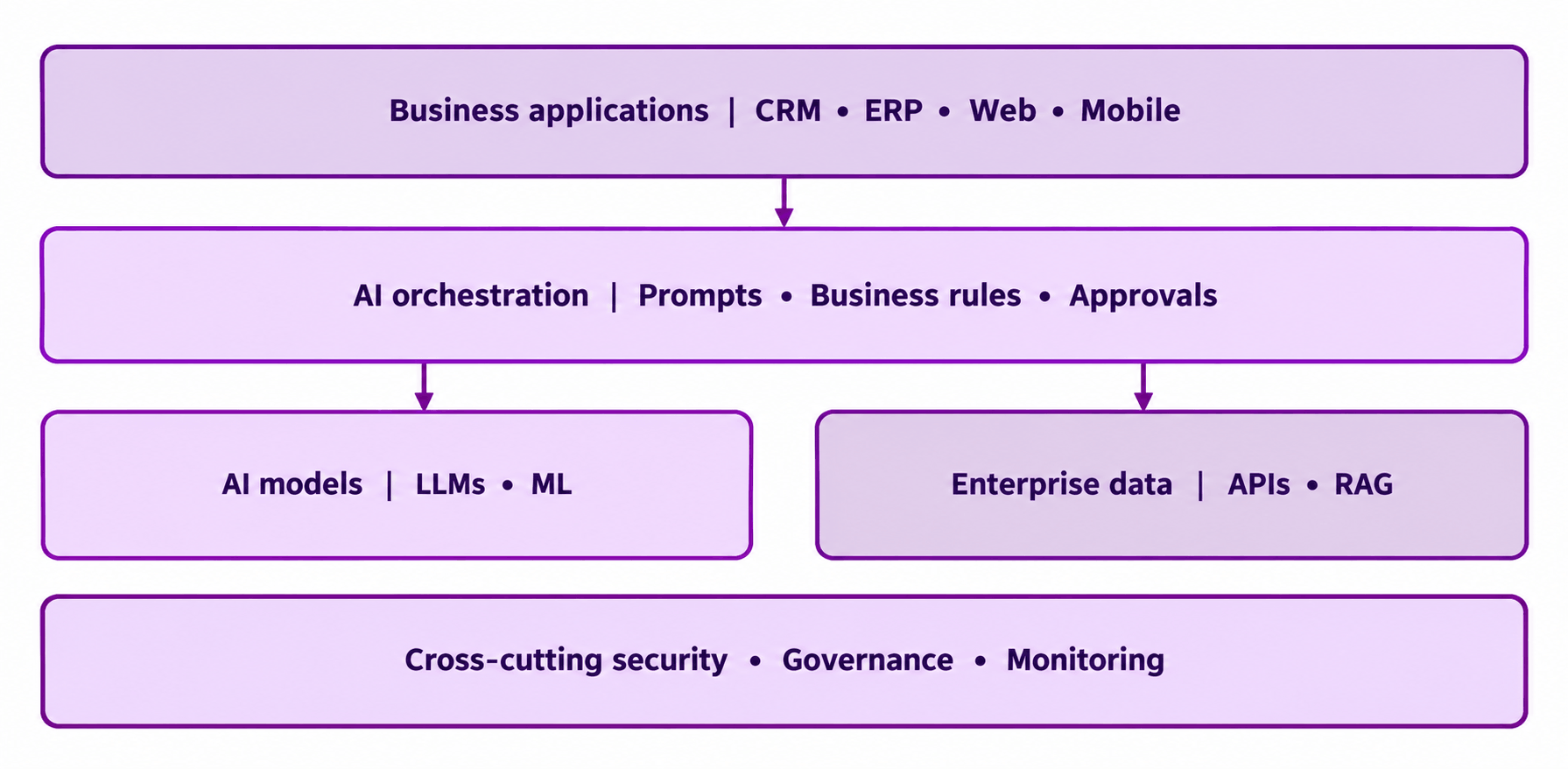
Figure 2. Conceptual enterprise AI architecture; production designs require additional controls.
Favor modular architecture so models, retrieval systems, and integrations can evolve without rebuilding the entire application. Evaluate latency, reliability, cost, vendor portability, identity management, and observability alongside model quality.
Key deliverable: an approved architecture and technology selection rationale.
Step 5: Develop and Test an AI Proof of Concept
A proof of concept (PoC) tests technical feasibility before larger commitments. For example, a finance team might trial invoice extraction against a representative set of documents and measure field accuracy, processing time, exceptions, and review effort. A support assistant could be evaluated for grounded answers, escalation quality, and response speed.
Use held-out test cases and realistic failure scenarios. For generative systems, test factuality, refusal behavior, missing information, prompt injection, and access control. Compare results against a baseline and define thresholds for moving to production. A technically impressive demonstration is not enough if it cannot meet operational requirements.
Key deliverable: pilot evaluation with measured results, limitations, operating costs, and a go/no-go decision.
Step 6: Implement AI Security, Compliance, and Responsible Governance
Security and governance must run throughout the lifecycle, not appear only at launch. AI introduces risks including sensitive-data disclosure, prompt injection, inaccurate recommendations, excessive tool permissions, and model manipulation. Apply least-privilege access, audit logs, output validation, incident response, and human approval for consequential actions.
The NIST AI Risk Management Framework provides a voluntary structure for managing AI risks; its Generative AI Profile addresses additional generative-system concerns. ISO/IEC 42001 describes requirements for an organizational AI management system. Applicable legal obligations depend on the industry, location, and use case.
Agents that only retrieve documents have different risk profiles from agents that can send communications, update financial records, or execute commands. Restrict actions to approved workflows and retain traceable records of decisions and tool use.
Key deliverable: AI risk register, governance policy, security assessment, and production approval checklist.
Step 7: Integrate AI Into Existing Business Workflows
AI creates durable value when it improves how work gets done. A standalone assistant may answer questions; an integrated application can retrieve approved CRM information, propose next actions, route exceptions, and update systems when authorized. Integration requires careful treatment of authentication, data synchronization, API failures, process ownership, and recovery from partial transactions.
Redesign the workflow deliberately: which steps remain human-led, which are AI-assisted, and which can be safely automated? Avoid simply inserting AI into an inefficient process. Workflow redesign has been identified in industry research as an important factor in realizing financial value from generative AI.
Key deliverable: a tested workflow with documented exceptions, interfaces, and operational responsibilities.
Step 8: Train Employees and Manage Organizational Change
Even a reliable solution can fail when employees do not understand its purpose or trust its outputs. Training should cover tool use, verification, privacy, escalation, and when AI is inappropriate. Give each department examples relevant to its actual work and provide feedback channels to improve the application.
Explain how responsibilities change, rather than presenting AI as an isolated software upgrade. Monitor active usage, training completion, satisfaction, and whether the redesigned process is actually being followed. Internal champions can help resolve early friction and identify new opportunities.
Key deliverable: an enablement plan with training, adoption metrics, communications, and support ownership.
Step 9: Measure AI ROI and Operational Performance
Establish baseline performance before deployment. Track financial measures alongside quality, latency, adoption, error rates, and risk. Total cost includes software, model inference, integration, infrastructure, security, monitoring, training, maintenance, and human review. Count benefits as realized savings or incremental value, not simply theoretical hours saved.
A simplified calculation is ROI (%) = (Measured Benefits − Total Costs) ÷ Total Costs × 100. In the hypothetical example below, annual benefits are $180,000 and annual costs are $120,000, resulting in a $60,000 net benefit and a 50% simple annual ROI. This is not a forecast or industry benchmark.
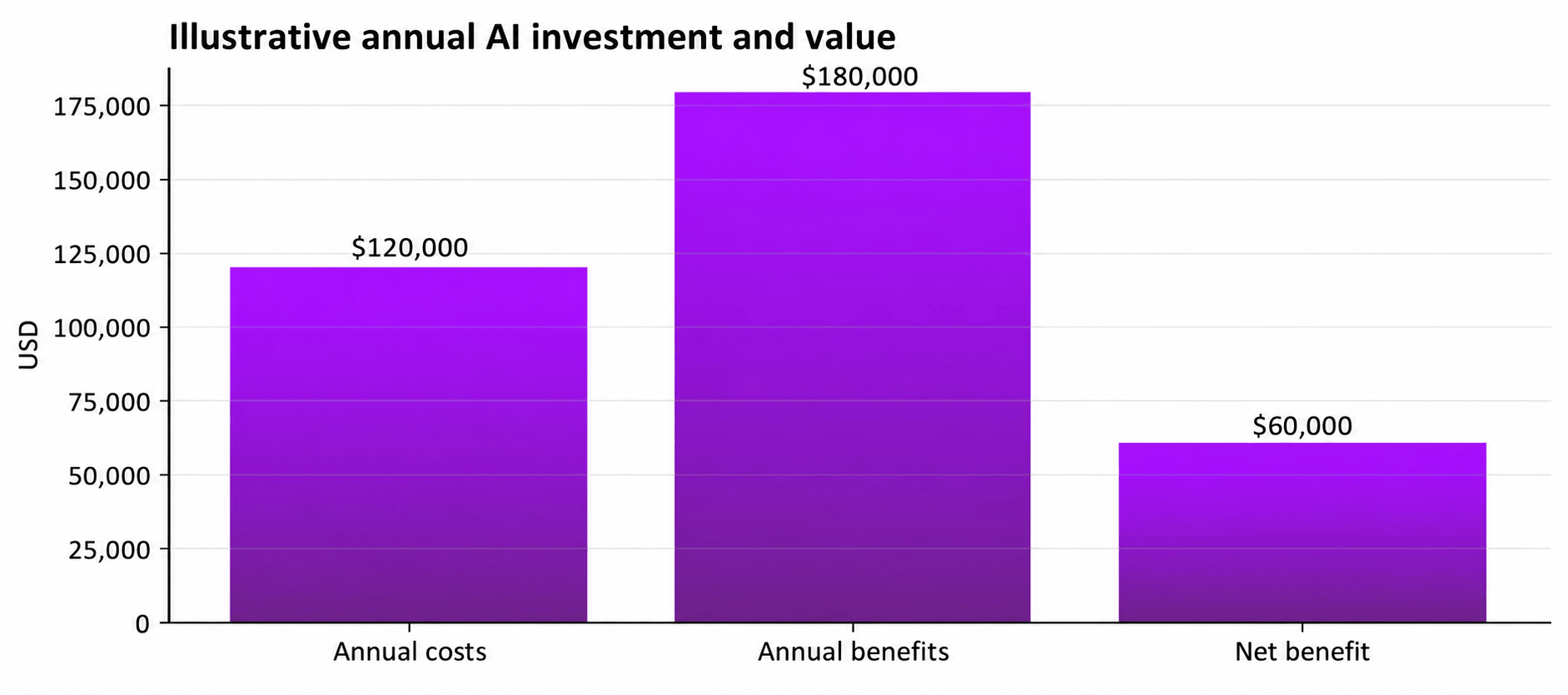
Figure 3. Hypothetical ROI example; all values illustrative.
A complete business case should account for one-time costs, implementation timing, risk-adjusted benefits, and ongoing operations. Use a dashboard that lets leadership distinguish technical success from business impact.
Key deliverable: an AI performance dashboard with financial, technical, operational, and risk indicators.
Step 10: Scale AI Across the Enterprise
Scale only after a pilot demonstrates reliable value. Different departments may have different data permissions, workflows, and regulatory obligations; success in one setting does not automatically transfer to another. Expand first to adjacent processes, then consider broader platforms and more autonomous applications.
Reusable capabilities—identity management, model gateways, evaluation, logging, approved integrations, and deployment standards—reduce duplication. Define ownership for ongoing model evaluation, vendor management, incidents, and budget. Treat AI as an operating capability rather than a series of disconnected demonstrations.
Key deliverable: an enterprise scaling plan with platform standards, governance, funding, and support ownership.
A Practical 12-Month AI Implementation Timeline
The sequence below is an illustrative plan for a business beginning its AI adoption journey. Phases can overlap, and regulated or highly integrated projects may take longer.
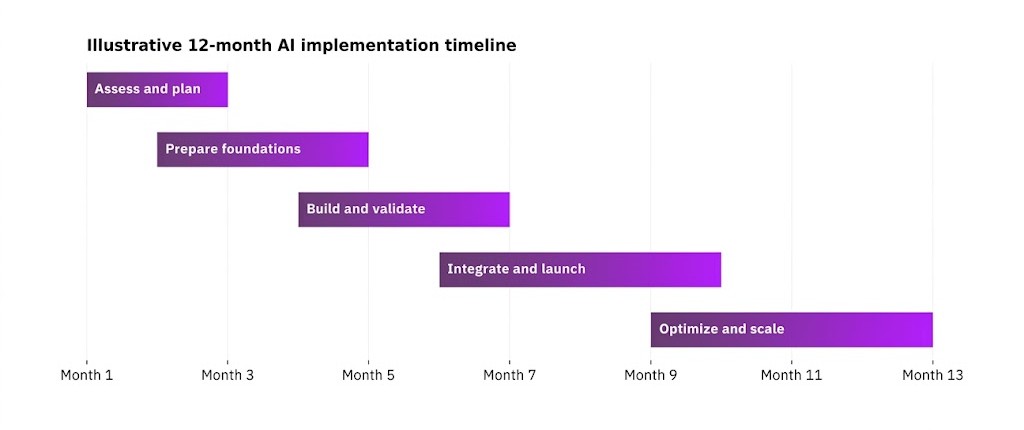
Figure 4. Illustrative first-year timeline, not a guaranteed schedule.
Common AI Implementation Mistakes to Avoid
Avoid choosing technology before business objectives, ignoring data quality, skipping governance, launching pilots without success criteria, underestimating integration complexity, neglecting employee adoption, and scaling before reliability is demonstrated. Each mistake can turn a promising pilot into a costly operational problem.
A disciplined program uses clear ownership, measurable checkpoints, controlled permissions, and a willingness to stop or redesign projects that do not meet their objectives.
Frequently Asked Questions
How long does AI implementation take?
A focused pilot may take several weeks, while enterprise integration and scaling can take months. Data readiness, risk, and system complexity are major factors.
How much does AI implementation cost?
Costs vary substantially by scope. SaaS features may require limited integration; custom enterprise applications can involve significant development and operating costs. Estimate against a defined use case.
What should a business do first?
Identify measurable business problems, assign a sponsor, and assess readiness before choosing a technology stack.
Should companies build or buy AI solutions?
Buy for common capabilities when vendor controls are acceptable; build when differentiated workflows, specialized data, or integration needs justify customization.
How can businesses reduce AI risks?
Use representative testing, secure data access, least-privilege permissions, human oversight, ongoing monitoring, and incident response procedures.
How is AI success measured?
Compare performance against a baseline using cost per task, processing time, accuracy, customer satisfaction, adoption, and realized financial benefits.
Conclusion: Build an AI Strategy That Delivers Business Value
AI implementation in 2027 should be approached as a structured business transformation initiative. The strongest roadmap starts with clear objectives, prioritizes high-value use cases, establishes trustworthy data foundations, and validates solutions before scaling. Security, governance, employee readiness, and measurable ROI should remain central throughout the program.
For organizations exploring their first AI use case or planning to expand existing initiatives, a focused assessment and pilot can reduce uncertainty and help align investments with practical outcomes. Thepermatech can position its AI consulting and engineering services around readiness assessments, integration planning, custom applications, and responsible deployment—subject to confirmation of current service offerings.