
In today’s hyper-connected world, data is produced at a scale that would have been unimaginable a decade ago. Every click, customer interaction, sensor reading, supply-chain event, cloud-based workflow, and marketing campaign contributes to the vast ocean of information businesses must handle. Yet data alone has no inherent value.
Its value is unlocked only when organizations can interpret, visualize, and transform it into actionable intelligence.
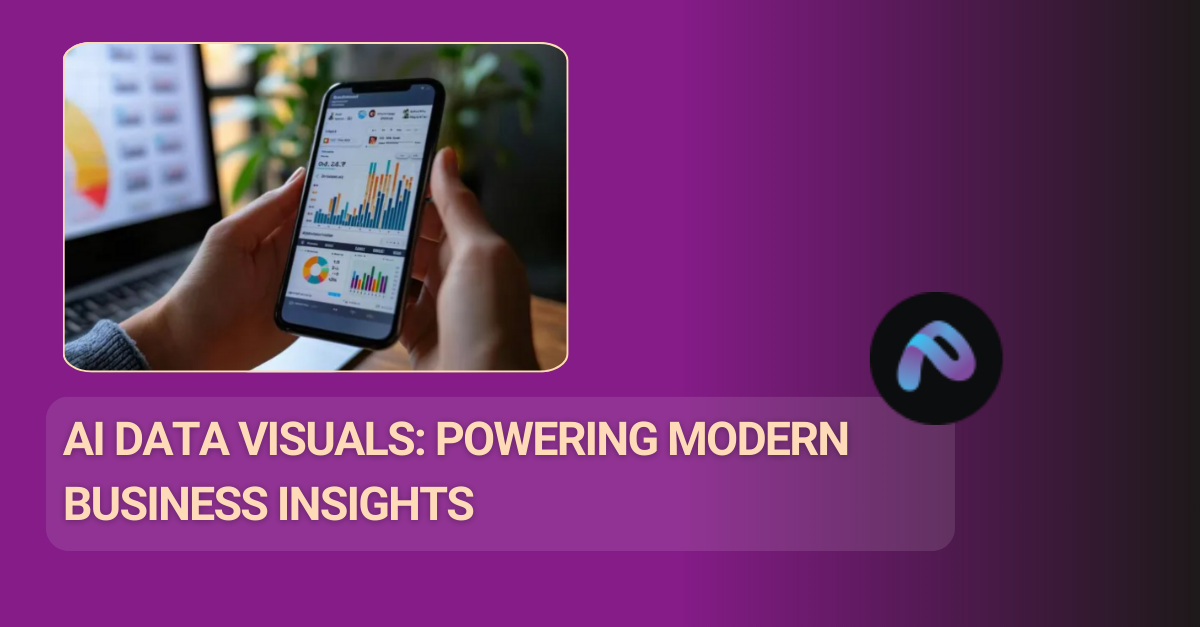
This is where AI-powered data visualization is redefining the way companies operate. By blending advanced analytics, machine learning, predictive intelligence, and interactive dashboards, businesses can finally “see the invisible”—patterns, anomalies, opportunities, and risks that human analysts would otherwise miss.
This article explores how AI-backed visuals are shaping modern decision-making, why businesses are rapidly adopting AI visualization tools, and what the future holds for data-driven organizations.
Why Traditional Dashboards Are No Longer Enough
For years, businesses relied on static dashboards and manual reports to make decisions. But with the rise of big data, traditional visualization methods are showing limitations:
- Data grows too fast
- Manual analysis is time-consuming
- Insights lag behind real-time events
- Humans cannot detect micro-patterns or complex correlations
- Dashboards don’t adapt to user behaviour
Even worse—80% of business data is unstructured (images, emails, PDFs, documents, logs). Traditional BI tools cannot interpret these data formats.
AI visualizations overcome all these barriers by providing:
- Real-time interpretation
- Predictive visuals
- Automated pattern detection
- Natural language explanations
- Personalized insights
And most importantly—automation.
What Is AI-Powered Data Visualization?
AI-powered data visualization combines:
- Artificial Intelligence (AI)
- Machine Learning (ML)
- Natural Language Processing (NLP)
- Predictive Analytics
- Automated Insight Generation
These technologies enhance typical dashboards and charts by:
- Automatically identifying trends
- Predicting outcomes
- Identifying anomalies
- Recommending decisions
- Creating interactive, adaptive visual stories
Instead of “showing data,” AI now explains data.
How AI Makes Visualizations Smarter
AI enhances data visualization in several key ways:
1. Automated Insight Discovery
AI scans millions of data points and highlights insights without needing human direction.
For example:
- “Sales dipped 12% in the northern region due to delayed shipments.”
- “Customer churn probability increased by 8% for subscription tier B.”
2. Predictive Intelligence
AI forecasts future events using historical patterns.
Examples of predictions:
- Demand forecasting
- Sales trends
- Customer churn
- Inventory shortages
- Revenue projections
3. Anomaly Detection
AI identifies unusual patterns instantly:
- Fraud alerts
- Sudden traffic surges
- Drops in performance
- Quality or production deviations
4. Natural Language Querying
Users can ask the system:
“Show me sales trends for Q3”
“Which product category produced the highest ROI?”
And AI generates visuals instantly.
5. Dynamic & Personalized Dashboards
Dashboards adapt to:
- User preference
- Role
- Behaviour
- Recent activity
AI ensures every user sees what matters most to them.
Analytical Table: Business Value of AI Visuals
Below is a data-backed comparison showing the impact of AI-powered visualization versus traditional reporting tools.
| Business Metric | Traditional Reporting | AI-Powered Visualization | Improvement |
| Insight generation speed | Hours to days | Real-time or seconds | 95% faster |
| Data accuracy | 70–80% (manual errors) | 95–99% (AI validated) | +20% accuracy |
| Decision-making speed | Slow, reactive | Instant, proactive | 5x faster |
| Cost reduction | Minimal | Significant (automation reduces manual work) | Up to 40% |
| Ability to detect hidden patterns | Low | High | 10x improvement |
| Predictive capabilities | None | Strong ML-driven forecasting | Transformational |
| User accessibility | Analysts only | Anyone (NLP-based queries) | +60% adoption |
Insight: Organizations using AI-driven visuals gain a competitive advantage in speed, accuracy, and strategic clarity.
Statistics That Prove the Power of AI Visualization
Recent studies highlight the global shift toward AI-powered analytics:
- 65% of enterprise leaders say AI visualization significantly improves decision-making.
- Businesses using AI analytics experience 37% higher operational efficiency.
- 54% reduction in time spent on manual reporting when AI is integrated.
- The global market for AI-enabled BI tools is projected to grow to $44.3 billion by 2030.
- Companies leveraging predictive visualization report 23% higher revenue growth.
These numbers highlight a simple truth: businesses that visualize data with AI outperform those that don’t.
Where AI-Powered Visuals Are Transforming Industries
1. Finance & Banking
- Fraud detection heatmaps
- Risk scoring visual graphs
- Real-time transaction monitoring
2. Retail & E-Commerce
- Dynamic product recommendation visuals
- Forecasting customer purchasing behaviour
- Inventory prediction
3. Healthcare
- Patient risk monitoring
- Predictive disease pattern mapping
- Treatment outcome visuals
4. Manufacturing
- Quality control heatmaps
- Supply chain disruption predictions
- Machine failure forecasting
5. Marketing
- Attribution modelling
- Campaign performance dashboards
- Customer segmentation patterns
6. Logistics & Supply Chain
- Route optimization visuals
- Real-time delivery maps
- Cost-to-serve analytics
AI enhances not only speed and clarity but also context turning every visualization into a strategic tool.
📌 Information Box: Trending Update (2025)
Trend Alert: Generative AI is Now Creating Entire Dashboards Automatically
The latest advancement in 2025 is Generative BI, where AI tools like GPT-powered analytics engines automatically:
- Build dashboards
- Generate graphs
- Interpret datasets
- Recommend business strategies
Just upload your CSV, Excel, or database connection and AI builds complete insights within minutes.
This shift marks the beginning of Zero-Manual BI, expected to dominate enterprise analytics by 2026.
Top AI Tools Driving Data Visualization in 2025
Here are some of the most influential AI visualization platforms:
1. Microsoft Power BI + Copilot
- AI-driven summarization
- Automated DAX creation
- Predictive visuals
2. Tableau GPT
- Conversational analytics
- Auto-insights stories
- Trend detection
3. Google Looker AI
- Predictive dashboards
- ML-powered segmentation
- Anomaly detection
4. Qlik Sense AI
- Auto-generated charts
- Automated ML modelling
- Real-time behavioural insights
5. Sisense Fusion AI
- Embedded analytics
- AI-generated narratives
- Industry-specific visual models
6. ThoughtSpot
- NLP querying
- Self-service analytics
- Personalized dashboards
How AI-Driven Visuals Improve Business Decision-Making
1. Faster Decisions
Executives get instant clarity without waiting for data teams.
2. Enhanced Accuracy
AI validates and cross-checks data using algorithms.
3. Better Forecasting
Businesses can plan inventory, staffing, and investments more intelligently.
4. Eliminates Guesswork
Every trend is backed by quantifiable insights.
5. Democratizes Data
Non-technical teams can access the same high-quality insights as analysts.
6. Saves Time & Cost
Automated reporting reduces reliance on manual workflows.
How to Integrate AI Visualization into Your Organization
Here’s a step-by-step adoption roadmap:
Step 1: Identify High Impact Use Cases
Examples:
- Sales forecasting
- Customer segmentation
- Inventory prediction
Step 2: Consolidate Your Data
Use:
- Data warehouses
- Data lakes
- Cloud storage (AWS, Azure, Google Cloud)
Step 3: Choose the Right AI Visualization Tool
Select based on:
- Scalability
- User-friendly interface
- Integration capability
Step 4: Automate Reporting Workflows
Enable:
- Real-time dashboards
- Scheduled insights
- Automated workflows
Step 5: Train Teams
Promote data literacy across all departments.
Step 6: Monitor, Refine & Scale
Continuously evaluate insights and optimize dashboards.
The Future of AI-Powered Data Visualization
The next decade will see even more groundbreaking shifts:
1. Zero-Click Analytics
Dashboards will appear automatically based on business needs.
2. Emotion-Aware Visuals
AI will personalize dashboards based on user behaviour and preferences.
3. Autonomous Decision Systems
AI will not only predict but also execute decisions (with human approval).
4. Multi-modal Visual Analytics
Combining:
- text
- video
- audio
- geospatial
- behavioural data
into unified dashboards.
5. Digital Twins
Physical business processes will be mirrored in real-time AI dashboards.
6. Fully Conversational BI
Users will interact with dashboards like speaking to a colleague:
“Explain why revenue dropped yesterday.”
“Show anomalies in supplier performance.”
Conclusion
AI-powered data visualization is no longer a luxury,it is a competitive necessity. Businesses that embrace AI-driven visuals can:
- Detect hidden patterns
- Forecast outcomes
- Respond faster
- Improve efficiency
- Drive higher revenue
- Empower teams with accessible insights
As data continues to grow exponentially, AI is the only way to navigate, interpret and utilize it effectively. Modern organizations must evolve beyond static dashboards and transition toward intelligent, predictive and adaptive visualization systems that turn invisible data into visible strategy.In short AI helps businesses see what truly matters.