
In today’s hyper regulated business environment, compliance is no longer a once a year activity. Governments across the globe are modernizing tax systems, enforcing real time reporting, mandating digital invoicing, and tightening audit requirements. As regulations evolve faster than traditional finance processes, businesses face a critical challenge: how to stay compliant without slowing growth.
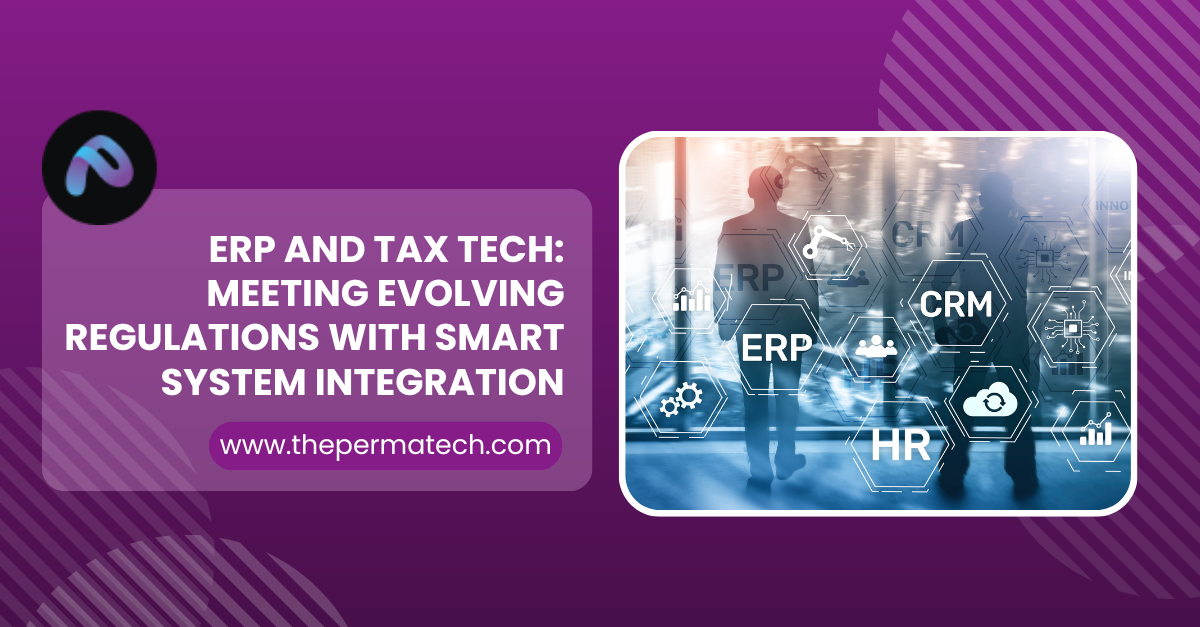
This is where the convergence of Enterprise Resource Planning (ERP) and Tax Technology (Tax Tech) becomes essential. Smart system integration enables organizations to automate tax compliance, reduce risk, and gain real-time financial visibility,while keeping pace with changing laws.
This blog explores how ERP and Tax Tech integration helps organizations meet evolving regulations, supported by current data, real-world analysis, and practical insights.
The Regulatory Landscape Is Changing Faster Than Ever
Tax authorities worldwide are moving away from retrospective reporting toward continuous transaction controls (CTC) and real time compliance.
Key Global Regulatory Trends (2025–2026)
| Regulation Trend | Description | Regions Impacted |
| E-Invoicing Mandates | Digital invoices submitted directly to tax authorities | EU, India, Brazil, Mexico |
| Real-Time VAT Reporting | Immediate reporting of sales and purchase data | Italy, Spain, France |
| Digital Tax Audits | Automated audits using transaction-level data | OECD countries |
| ESG & Tax Transparency | Disclosure of tax and sustainability data | EU, US, UK |
| Transfer Pricing Automation | Stricter documentation & cross-border scrutiny | Global MNCs |
According to the OECD, over 80% of VAT-collecting countries now require or are planning digital tax reporting systems. Manual processes simply cannot scale with this level of complexity.
Why Traditional ERP Systems Are No Longer Enough
Legacy ERP systems were designed primarily for financial accounting and operations, not continuous tax compliance.
Common ERP Limitations in Tax Compliance
- Static tax rules that require manual updates
- Limited country specific tax logic
- Delayed reporting cycles
- Heavy reliance on spreadsheets
- High risk of human error
As a result, finance teams often patch gaps using disconnected tools, creating data silos and compliance blind spots.
What Is Tax Tech and Why It Matters?
Tax Technology (Tax Tech) refers to specialized software that automates tax determination, reporting, filing, and audit defense.
Tax Tech systems typically handle:
- Indirect taxes (VAT, GST, Sales Tax)
- Withholding tax
- Corporate income tax calculations
- Transfer pricing documentation
- E-invoicing and e-way bills
- Regulatory reporting & audit trails
When integrated with ERP, Tax Tech transforms tax from a reactive function into a real-time, intelligent process.
Smart ERP + Tax Tech Integration: How It Works
Smart integration connects ERP transactional data directly with tax engines and compliance platforms.
Typical Integration Flow
- ERP records transaction (sales, purchase, payroll)
- Tax engine evaluates tax rules in real time
- Correct tax applied automatically
- Compliance data stored and reported
- Audit-ready logs generated instantly
This closed-loop system ensures accuracy, speed, and regulatory alignment.
Key Benefits of ERP and Tax Tech Integration
1. Real Time Regulatory Compliance
Tax rules change frequently sometimes overnight. Integrated systems allow:
- Instant tax rule updates
- Automatic recalculation of taxes
- Compliance with real time reporting mandates
This is especially critical for countries like India (GST), Italy (SDI), and Brazil (SPED).
2. Reduced Compliance Risk and Penalties
Manual tax handling leads to:
- Incorrect tax rates
- Missed filings
- Incomplete audit trails
Integrated systems create:
- Standardized processes
- Automated validations
- Complete traceability
This significantly lowers financial and reputational risk.
3. Faster Financial Close and Reporting
With automated tax postings:
- Month end close is faster
- Fewer reconciliation issues
- Accurate tax provisions available instantly
Finance teams can focus on strategy instead of firefighting.
4. Scalability Across Countries and Entities
As companies expand globally, tax complexity multiplies.
| Scenario | Without Integration | With Integration |
| New country launch | Manual setup, high risk | Prebuilt tax rules |
| Cross-border sales | Spreadsheet tracking | Automated tax logic |
| Regulatory updates | Delayed compliance | Real-time updates |
Integrated platforms support multi country compliance at scale.
ERP and Tax Tech Use Cases by Industry
Manufacturing & Supply Chain
- GST/VAT on raw materials
- E-way bill automation
- Cross border duty calculations
Retail & E-Commerce
- Marketplace tax compliance
- Real time sales tax calculation
- Digital invoice generation
SaaS & Digital Services
- Place of supply determination
- Subscription tax handling
- Cross jurisdiction VAT compliance
Financial Services
- Withholding tax automation
- Regulatory reporting
- Audit ready transaction logs
Data Driven Insight: ROI of Smart Tax Integration
Recent studies show measurable returns from ERP Tax Tech integration:
| Metric | Improvement |
| Tax error reduction | 45–60% |
| Audit response time | ↓ 40% |
| Compliance costs | ↓ 30% |
| Manual effort | ↓ 50% |
| Regulatory readiness | ↑ Significantly |
(Source: Deloitte, PwC, Gartner 2024–2025 reports)
Choosing the Right Integration Strategy
Not all integrations are equal. Successful implementation requires:
Best Practices
- API based real time integration
- Centralized tax rule management
- Country specific compliance modules
- Strong data governance
- Continuous monitoring & updates
Common Mistakes to Avoid
- Treating tax as an afterthought
- Over customizing ERP logic
- Ignoring future regulatory scalability
- Lack of cross team collaboration (IT + Finance + Tax)
The Future of ERP and Tax Tech
The next evolution is already underway:
- AI driven tax determination
- Predictive compliance alerts
- Blockchain based audit trails
- Real time global tax dashboards
- Embedded ESG and tax transparency reporting
As governments digitize further, compliance will become continuous, automated, and data driven. Businesses that modernize now will gain a competitive advantage.
Conclusion
ERP and Tax Tech integration is no longer just a technology upgrade,it’s a strategic necessity. In a world of real time regulation, digital audits and global transparency, smart system integration enables businesses to stay compliant, reduce risk, and operate with confidence.Organizations that invest in modern ERP Tax Tech ecosystems today will not only meet regulatory demands but also unlock operational efficiency, financial clarity, and long-term resilience.