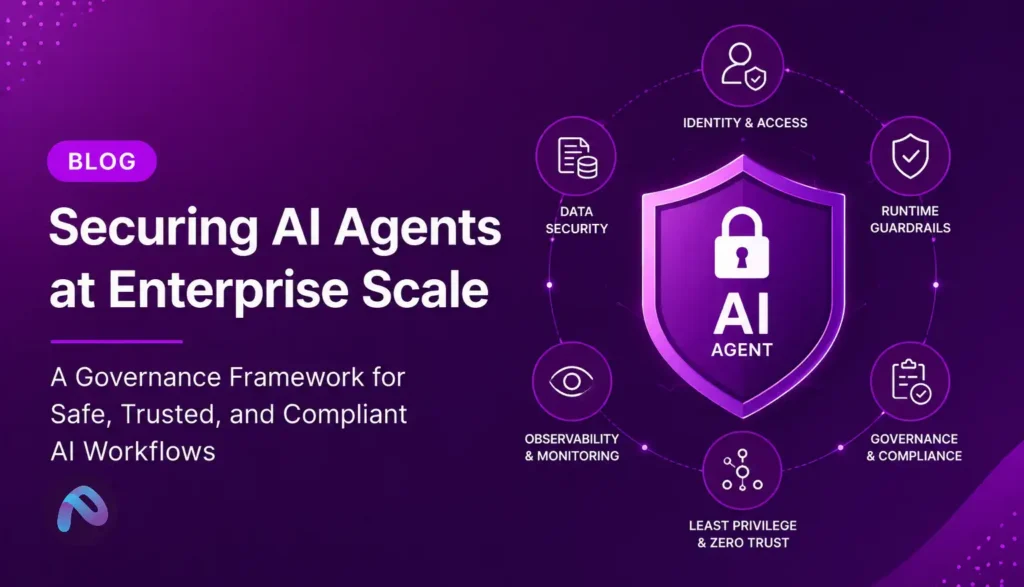

Artificial Intelligence (AI) has rapidly evolved from a futuristic concept into a transformative force powering almost every industry,healthcare, finance, retail, cloud computing, manufacturing, cybersecurity and creative design. With the rise of generative AI, agentic systems and deep learning, the world is entering a new era of intelligent automation and autonomous decision making.
This guide breaks down the foundations of AI, how it works, why it matters and the growing challenges organizations must prepare for.
What Is Artificial Intelligence (AI)?
Artificial Intelligence refers to computer systems capable of performing tasks that typically require human intelligence. These tasks include:
- Understanding natural language
- Recognizing images and patterns
- Making predictions
- Solving problems
- Learning from data
- Automating repetitive processes
AI works by using mathematical models and huge volumes of data to simulate cognitive functions such as reasoning, learning and decision making.
Key AI Domains
- Machine Learning (ML): Systems learn from data and improve over time.
- Deep Learning: A subset of ML using neural networks with multiple layers.
- Generative AI: Creates new content text, images, audio, code.
- Agentic/AI Agents: Systems that execute tasks autonomously with planning and feedback loops.
AI has progressed from simple rule based systems to advanced models capable of reasoning, adapting, and generating human like content.
What Is Generative AI?
Generative AI uses deep learning models (like GPT, DALL·E, Claude, Gemini, etc.) to create new content based on training data.
What Generative AI Can Produce
- Text (blogs, emails, scripts)
- Images & designs
- Code snippets
- Videos
- Music & soundscapes
- 3D models
- Synthetic data
How Generative AI Works
Generative models learn patterns, structure, and relationships within existing data. Using this knowledge, they generate new outputs that resemble the training data, but are not direct copies.
Popular Generative AI Technologies
- Large Language Models (LLMs): GPT-4, GPT-5, Claude 3, Gemini
- Diffusion Models: Midjourney, Stable Diffusion
- Generative Adversarial Networks (GANs)
Benefits of AI (With Industry Evidence)
AI is no longer an optional investment,it is a competitive necessity.
Below is an analytical table showing AI’s impact across industries.
Analytical Table: ROI and Impact of AI Across Industries (2025 Outlook)
| Industry | AI Use Cases | Efficiency Gain | Cost Savings | Primary Impact |
| Healthcare | Diagnosis, medical imaging, drug discovery | 40% | $150B globally | Faster diagnosis, reduced errors |
| Finance | Fraud detection, predictive analytics | 35% | $120B | Lower fraud, better risk management |
| Retail | Personalization, inventory optimization | 30% | $95B | Higher conversions, reduced stock-outs |
| Manufacturing | Predictive maintenance, robotics | 45% | $250B | Reduced downtime, automation |
| Cloud/IT | Generative DevOps, AIOps | 50% | $80B | Faster deployments, self-healing systems |
| Marketing | AI content, segmentation | 28% | $40B | High-scale personalization |
| Cybersecurity | Threat detection, anomaly detection | 35% | $65B | Real-time security intelligence |
Takeaway:
AI doesn’t just automate tasks,it multiplies productivity, enhances decision making and drives measurable financial impact.
Understanding Deep Learning
Deep Learning is a subset of machine learning modeled after how the human brain works. It uses artificial neural networks software architectures inspired by biological neurons.
How Deep Learning Works
A deep learning model has:
- Input layer: receives data
- Hidden layers: extract patterns
- Output layer: generates predictions
The more layers a network has, the more complex patterns it can learn.
Where Deep Learning Is Used
- Image recognition (e.g., radiology, facial ID)
- Natural language processing
- Self-driving cars
- Speech recognition
- Robotics
- Weather forecasting
- Fraud detection
Why Deep Learning Matters
It enables AI to understand unstructured data like images, audio, and text human’s primary modes of communication.
What Is an Integrated Circuit (IC) in AI?
An Integrated Circuit (IC) is a tiny electronic chip made of semiconductor material (usually silicon) that contains millions to billions of microscopic components such as:
- Transistors
- Resistors
- Capacitors
- Logic gates
These components work together to perform electrical operations.
ICs are the foundation of all modern computing devices from phones to laptops to AI servers.
What Role Does an IC Play in AI?
AI systems need to handle massive amounts of data at high speed. ICs designed for AI include special purpose chips optimized for:
Fast Mathematical Calculations
AI relies heavily on matrix multiplication for deep learning.
Special ICs like GPUs, TPUs, and NPUs are optimized for this.
Large Parallel Processing
AI models run thousands of operations simultaneously, which requires many transistors and parallel compute units inside an IC.
Low Power Consumption
AI chips in mobile phones (e.g., Apple Neural Engine, Qualcomm Hexagon) are designed as ICs that perform huge AI tasks using less power.
AI Agent vs Agentic AI , What’s the Difference?
There is often confusion between AI Agents and Agentic AI. Although related, they represent different levels of autonomy and reasoning.
AI Agent
An AI Agent is a software program that performs a specific task autonomously.
Examples:
- Chatbots
- Scheduling assistants
- Support automation bots
- Email automation tools
Characteristics
- Reactive
- Task specific
- Works within predefined rules or prompts
- Limited memory
Agentic AI
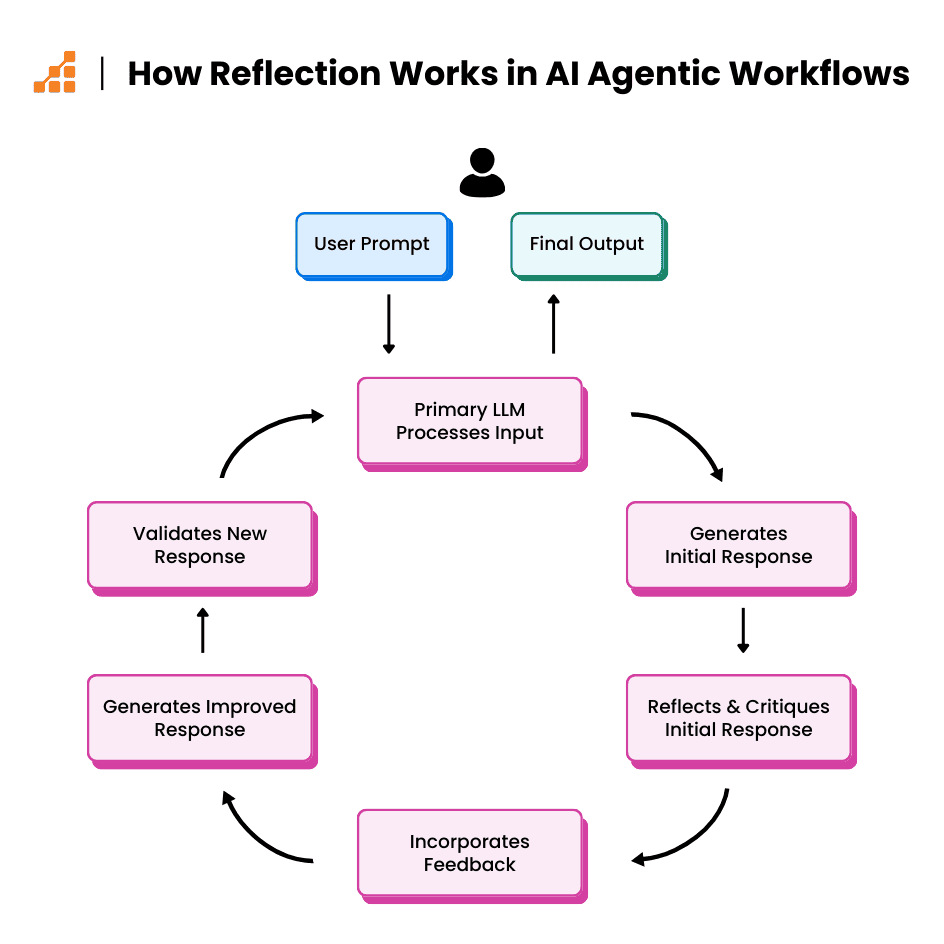
Agentic AI is the next evolution,AI systems capable of planning, reasoning, self correcting and executing multi step workflows without human intervention.
Characteristics of Agentic AI
- Multi step autonomous execution
- Long term memory
- Reasoning and decision making
- Tool usage (APIs, browsers, databases)
- Feedback loops
- Self correction
Real World Example
- AI that analyzes inventory → orders stock → updates ERP → notifies team
- AI that writes, tests and deploys code independently
- AI driven cyber defense systems detecting and responding to threats automatically
Comparison Table: AI Agent vs Agentic AI
| Feature | AI Agent | Agentic AI |
| Autonomy Level | Low | High |
| Task Type | Single task | Multi step workflows |
| Memory | Minimal | Long term memory |
| Reasoning Ability | Limited | Advanced |
| Tool Use | Basic | Multi tool execution |
| Self-Correction | No | Yes |
| Human Involvement | Frequent | Minimal |
| Examples | Chatbot, email assistant | AI engineer, AI decision maker, AI operations bot |
Graph: AI Growth in Enterprise Adoption (2020–2025)
Below is a descriptive graph you can recreate:
Title: AI Adoption Rate Across Global Enterprises (2020–2025)
Format: Line Graph
| Year | AI Adoption (%) |
| 2020 | 27% |
| 2021 | 33% |
| 2022 | 45% |
| 2023 | 55% |
| 2024 | 62% |
| 2025 (Projected) | 78% |
Analysis:
The curve shows a steep upward acceleration after 2022, primarily due to:
- Explosion of generative AI
- Lower cost of AI tools
- AI embedded cloud services
- Enterprise pressure to automate workflows
Enterprises that delay AI adoption risk losing significant competitive advantage in the next 3 years.
Challenges and Risks of AI
Despite its massive potential, AI brings several challenges businesses must navigate carefully.
1. Data Privacy & Security Risks
2. Model Bias and Fairness Issues
3. Over Reliance on Automation
4. AI Hallucinations
5. Intellectual Property Challenges
6. Job Displacement
7. Ethical & Regulatory Complexity
Conclusion
AI has become the backbone of modern digital transformation. From deep learning to generative AI to agentic autonomous systems, organizations are leveraging advanced intelligence to unlock scalability, resilience and innovation.However, AI also introduces new risks privacy, bias, hallucinations, regulation, and job displacement. The future belongs to companies that can adopt AI responsibly, build trustworthy systems, and prepare for a world where intelligent agents collaborate with humans to drive exponential outcomes.