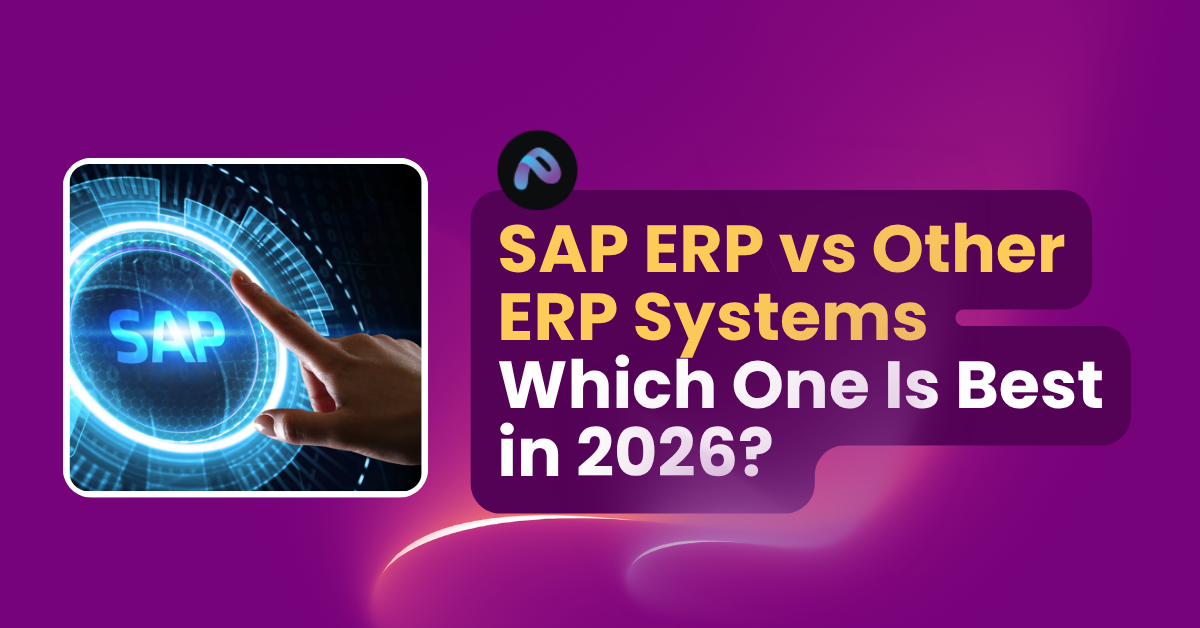

In today’s rapidly evolving digital economy, Enterprise Resource Planning (ERP) systems have become the backbone of modern organizations. As we step into 2026, businesses are increasingly prioritizing automation, AI-driven insights, scalability, and cloud-native architectures. Among the many ERP solutions available, SAP ERP continues to dominate the enterprise landscape, but competitors like Oracle NetSuite, Microsoft Dynamics 365, Odoo, and Infor are closing the gap.
Is SAP ERP still the best choice in 2026, or are other ERP systems more suitable?
In this comprehensive guide, we break down SAP ERP vs other ERP systems using real comparisons, updated trends, and analytical insights to help you make the right decision.
What is SAP ERP?
SAP ERP (Systems, Applications, and Products in Data Processing) is one of the most widely used enterprise software solutions globally. SAP’s latest offering, SAP S/4HANA Cloud, is built on an in-memory database, enabling real-time data processing, advanced analytics, and AI-driven automation.
Key Features of SAP ERP (2026)
- Real-time analytics with SAP HANA
- AI-powered automation (SAP Joule AI assistant)
- Advanced supply chain and manufacturing capabilities
- Industry-specific solutions (retail, healthcare, finance, etc.)
- Strong compliance and global scalability
Major ERP Systems in 2026
Here are the leading ERP systems competing with SAP:
- Oracle NetSuite – Cloud-first ERP for mid to large enterprises
- Microsoft Dynamics 365 – Integrated with Microsoft ecosystem
- Odoo ERP – Open-source, highly customizable
- Infor ERP – Industry-specific ERP solutions
- Acumatica – Cloud ERP for SMBs
SAP ERP vs Other ERP Systems: Feature Comparison (2026)
| Feature / ERP | SAP S/4HANA | Oracle NetSuite | Microsoft Dynamics 365 | Odoo ERP | Infor ERP |
| Deployment | Cloud & On-prem | Cloud | Cloud & Hybrid | Cloud & On-prem | Cloud |
| Target Market | Large Enterprises | Mid-Large | SMB to Enterprise | SMB | Industry-focused |
| AI & Automation | Advanced (SAP AI) | Moderate | Strong (Copilot AI) | Limited | Moderate |
| Customization | High | Moderate | High | Very High | High |
| Ease of Use | Moderate | Easy | Easy | Moderate | Moderate |
| Cost | High | Medium | Medium | Low | Medium |
| Implementation Time | Long | Medium | Medium | Short | Medium |
| Industry Solutions | Extensive | Moderate | Good | Limited | Strong |
Market Share & Adoption Trends (2026)
According to industry reports and ERP market analysis:
| ERP Vendor | Estimated Market Share (2026) |
| SAP | ~23% |
| Oracle | ~15% |
| Microsoft | ~12% |
| Infor | ~6% |
| Others (Odoo, etc.) | ~44% |
Key Insight:
- SAP continues to dominate large enterprise deployments
- Microsoft Dynamics is growing rapidly due to AI + Office integration
- Odoo is gaining traction among startups and SMBs
SAP ERP Advantages in 2026
1. Unmatched Scalability
SAP is designed for complex, global operations. Large enterprises with multiple business units benefit from its deep integration capabilities.
2. Advanced AI & Analytics
SAP has significantly invested in AI with tools like:
- Predictive analytics
- Automated financial forecasting
- Intelligent supply chain optimization
3. Industry-Specific Modules
SAP offers pre-built solutions tailored for:
- Manufacturing
- Retail
- Healthcare
- Oil & Gas
- Government sectors
4. Real-Time Data Processing
Thanks to the HANA in-memory database, SAP processes large datasets instantly, enabling faster decision-making.
SAP ERP Disadvantages
1. High Cost
SAP is one of the most expensive ERP systems, including:
- Licensing fees
- Implementation costs
- Maintenance
2. Complex Implementation
Deployment can take 6 months to 2 years, depending on business size.
3. Steep Learning Curve
Users often require training to fully utilize SAP’s capabilities.
How Other ERP Systems Compare
Oracle NetSuite
- Fully cloud-based and easier to deploy
- Ideal for growing mid-sized businesses
- Less complex than SAP but not as powerful
Microsoft Dynamics 365
- Strong integration with Microsoft tools (Excel, Teams, Azure)
- AI Copilot enhances productivity
- Best for companies already using Microsoft ecosystem
Odoo ERP
- Open-source and cost-effective
- Highly customizable
- Best for startups and SMEs
Infor ERP
- Strong industry-specific focus
- Good for manufacturing and healthcare sectors
Cost Comparison
| ERP System | Approx Cost (Annual per User) |
| SAP S/4HANA | $1500 – $4000+ |
| Oracle NetSuite | $999 – $2500 |
| Microsoft Dynamics | $600 – $1800 |
| Odoo ERP | $100 – $500 |
| Infor ERP | $1000 – $3000 |
Performance & ROI Analysis
SAP ERP ROI Factors
- Automation reduces operational cost by 20–40%
- Real-time analytics improves decision-making speed by 30%
- Supply chain optimization reduces delays by 25%
Other ERP ROI Factors
- Lower initial investment
- Faster deployment
- Easier user adoption
When Should You Choose SAP ERP?
SAP ERP is best if:
- You are a large enterprise
- You operate globally
- You need advanced analytics & AI
- Your processes are complex (finance, logistics, manufacturing)
When Should You Choose Other ERP Systems?
Choose alternatives if:
- You are a startup or SMB
- You need quick implementation
- Budget is limited
- You prefer simplicity over complexity
2026 ERP Trends to Consider
Before choosing an ERP, consider these trends shaping 2026:
1. AI-First ERP Systems
AI is no longer optional. Systems like SAP and Microsoft are leading here.
2. Cloud-Native Adoption
Most companies are moving away from on-premise systems.
3. Composable ERP
Businesses prefer modular ERP systems rather than monolithic ones.
4. Integration Ecosystems
ERP systems must integrate with:
- CRM
- eCommerce
- Analytics tools
- APIs
Final Verdict: Which ERP is Best in 2026?
There is no one-size-fits-all answer.
SAP ERP is Best For:
- Large enterprises
- Complex operations
- Global scalability
Microsoft Dynamics / NetSuite is Best For:
- Mid-sized businesses
- Faster deployment needs
Odoo is Best For:
- Startups and small businesses
- Budget-conscious companies
Conclusion
In 2026, SAP ERP remains a powerhouse solution, especially for enterprises that require scalability, advanced analytics, and industry-specific solutions. However, the rise of cloud-native, AI-powered competitors means businesses now have more choices than ever.
The best ERP system ultimately depends on your:
- Business size
- Budget
- Complexity
- Growth plans
If you’re evaluating ERP solutions or planning a digital transformation, it’s crucial to align your choice with long-term business goals.